King County · Washington
When a Semi Truck Changes Everything
Seattle truck accident lawyer Evan M. Oshan represents people who were seriously hurt, and families who lost someone, in crashes with semi trucks, delivery trucks and other commercial vehicles across King County. A truck company starts building its defense the day of the crash. You should have someone working for you just as fast.
Call (206) 206-6000
26+ years trying cases · Free, confidential consultation · Licensed in Washington and New York
By the Numbers
Truck Crash Statistics
5,472
people killed in U.S. crashes involving large trucks in 2023
70%
of those killed were in other vehicles, not the truck
153,452
people injured in U.S. large truck crashes in 2023
82
people killed in Washington crashes involving heavy trucks in 2023
Sources: NHTSA, Traffic Safety Facts: Large Trucks, 2023 Data (April 2025); Washington Traffic Safety Commission, State of the State Brief No. 11 (October 2025).
Why Truck Cases Are Different
Why Truck Accident Cases Are Different
Commercial trucking is governed by federal safety rules, backed by large insurance policies and defended by companies that know exactly what to do after a crash. These are the issues that decide most serious truck cases.
Federal safety rules
Interstate truck drivers are limited in how long they can drive. A property-carrying driver may drive a maximum of 11 hours after 10 consecutive hours off duty, inside a 14-hour window. Fatigue, skipped inspections and poor training all show up in the records.
Electronic logs and black box data
Most trucks record speed, braking, hours and location. That data can be overwritten or lost. We send a preservation letter right away so the trucking company has to keep it.
More than one company may be responsible
Besides the driver, the trucking company, the freight broker, the shipper that loaded the trailer, the maintenance shop and the truck or parts manufacturer can all share fault.
Larger insurance policies
Federal rules require most interstate carriers hauling general freight in trucks over 10,001 pounds to carry at least $750,000 in liability coverage. Many carry more. Finding every policy matters when injuries are life-changing.
Catastrophic injuries
An 80,000-pound truck causes brain injuries, spinal cord injuries, amputations and deaths. These cases need doctors, life care planners and economists to show what the future really costs.
The other side moves fast
Trucking companies and their insurers often send investigators to the scene within hours. Talking to their adjuster before you talk to a lawyer can hurt your case.
Truck Crashes We Handle
Common Types of Truck Accidents
✓
Rear-end collisions
A loaded semi needs far more room to stop than a car. When a driver follows too closely or looks away, the car ahead takes the full force.
✓
Jackknife crashes
The trailer swings out at an angle to the cab, often on wet roads or steep grades, and can sweep across several lanes at once.
✓
Rollovers
A high center of gravity, too much speed on a curve or ramp, or a load that shifts can tip a truck onto the vehicles beside it.
✓
Underride crashes
A car slides under the back or side of a trailer. These are among the deadliest crashes on the road.
✓
Wide-turn and blind-spot crashes
Trucks swing wide to turn and have large blind spots on every side. Cars, cyclists and pedestrians get caught in that space.
✓
Tire blowouts and brake failures
Worn tires and poorly maintained brakes can make a driver lose control, especially on long downgrades like I-90 east of North Bend.
✓
Lost or unsecured loads
Cargo that falls or spills from a trailer or flatbed can strike other vehicles or block lanes without warning.
✓
Head-on and lane-departure crashes
A tired or distracted driver drifts across the center line or onto the shoulder at highway speed.
Vehicles We See
Types of Commercial Trucks Involved in Serious Crashes
Semi trucks and 18-wheelers
Tractor-trailers can weigh up to 80,000 pounds loaded and need far more distance to stop than a car.
Box and delivery trucks
Local delivery trucks and vans make constant stops, tight turns and quick lane changes on city streets and in neighborhoods.
Garbage and recycling trucks
Collection trucks back up, stop in traffic lanes and work early in the morning near pedestrians and cyclists.
Dump and gravel trucks
Heavy, often overloaded trucks hauling rock and dirt to construction sites can spill loads and have long stopping distances.
Cement mixers
A full mixer carries a heavy, shifting load high off the ground, which makes rollovers more likely on turns.
Tanker trucks
Fuel and liquid tankers can surge and roll, and a crash can lead to fire, spills and serious burns.
Logging trucks
Log loads that are poorly secured can shift or fall, and these trucks travel mountain highways and rural roads.
Car carriers and flatbeds
Unsecured cargo, chains and overhanging loads can come loose and strike vehicles behind them.
Tow trucks
Tow trucks often work on the shoulder and pull into traffic with a disabled vehicle in tow, and their loads can come loose.
Rental moving trucks
Rental box trucks are often driven by people with no experience handling a large vehicle, its blind spots or its stopping distance.
Utility and bucket trucks
Power, cable and road crew trucks park in lanes, block visibility and swing booms and equipment near traffic.
Snowplows and government trucks
Plows, sanding trucks and other city, county or state vehicles bring extra legal steps, including a written claim before any lawsuit.
Why They Happen
What Causes Serious Truck Crashes
Most truck crashes come down to choices made by drivers and the companies that hire, train and dispatch them. Finding those choices is how a case is won.
01
Fatigue and hours violations
Drivers pushed to meet delivery windows drive past their legal limits or falsify logs.
02
Distraction
Phones, dispatch tablets and GPS screens take a driver’s eyes off the road for seconds that matter.
03
Speed and schedule pressure
Tight delivery schedules encourage speeding, especially in bad weather and work zones.
04
Impairment
Alcohol, drugs and some prescription medications slow reaction time and judgment.
05
Poor maintenance
Skipped inspections, worn brakes and bad tires are preventable failures.
06
Bad loading
An overweight or unbalanced trailer handles badly and can cause rollovers and jackknifes.
07
Negligent hiring and training
Some companies put inexperienced or unsafe drivers on the road to fill seats.
08
Ignoring weather and road conditions
Rain, snow, ice and fog call for slower speeds and more following distance, especially over Snoqualmie Pass. Drivers who keep the same pace put everyone around them at risk.
Driver Error
Distracted, Fatigued and Impaired Truck Drivers
Federal safety rules set a higher standard for truck drivers than for everyone else on the road. When a driver breaks those rules and someone is hurt, the violation is often powerful evidence.
Phones and texting
Federal rules bar truck drivers from texting or holding a phone to talk while driving, even in stopped traffic. Phone records can show whether the driver was on a call or typing when the crash happened.
Fatigue and long hours
A driver may not drive while too tired to do so safely, and federal limits cap driving at 11 hours after 10 hours off duty. Electronic logs, fuel receipts and delivery records can show a driver pushed past those limits.
Alcohol and drugs
Truck drivers may not drink within four hours of going on duty, and trucking companies must drug and alcohol test their drivers. Post-crash test results and the company's testing records are part of every serious case we handle.
The company's role
Trucking companies may not allow or require their drivers to text or use a hand-held phone while driving. When dispatch messages or delivery schedules pushed a driver to break the rules, the company shares the blame.
Weather and Road Conditions
Black Ice, Snow and Truck Crashes
We have handled truck cases where black ice and snow played a role. Bad weather is not an excuse. Federal rules require truck drivers to use extreme caution when snow, ice, sleet, fog or rain affect visibility or traction, to reduce speed, and to stop driving when conditions become too dangerous.
Black ice
Black ice forms on bridges, overpasses and shaded stretches of road and is almost impossible to see. A loaded truck needs far more distance to stop, so a driver who keeps normal speed in freezing weather can lose control or jackknife.
Snow and the mountain passes
In Washington, trucks over 10,000 pounds must carry chains on listed mountain routes from November 1 to April 1 and put them on when chains are required. Driving over Snoqualmie Pass without chaining up puts everyone on the road at risk.
Rain, spray and fog
Heavy rain, road spray kicked up by trucks and fog cut visibility for everyone. Worn tires and following too closely make hydroplaning and rear-end crashes far more likely.
When the road itself is a factor
Sometimes poor de-icing, missing warning signs or a dangerous road design contribute to a crash. A government agency may share responsibility, and special claim rules apply before any lawsuit.
Speed
Speeding Trucks and Why Every Mile per Hour Matters
Speed turns a mistake into a catastrophe. A truck’s engine computer usually records its speed in the seconds before a crash, so speeding can often be proven with the truck’s own data, not just argued.
✓
Washington’s truck speed limit
Under Washington law, vehicles over 10,000 pounds and vehicles pulling trailers may not exceed 60 miles per hour, even on highways where cars may legally go faster. Lower limits can be posted.
✓
Stopping distance
A fully loaded truck at highway speed can need nearly two football fields to stop under good conditions. Every extra mile per hour adds distance the truck does not have.
✓
Curves, ramps and work zones
Taking a curve, freeway ramp or work zone too fast is a leading way trucks roll over or lose their load onto other lanes.
✓
Long downgrades
On grades like I-90 east of North Bend, a driver who comes down too fast can overheat the brakes until they fade, leaving the truck unable to slow down.
Stopping Distance at 65 MPH
Passenger car (4,000 lbs): about 316 feet
Loaded semi truck (80,000 lbs): about 525 feet
Ideal road conditions. Wet roads, ice and worn brakes add more. Source: Utah Department of Transportation, Truck Smart.
Protecting the Evidence
What We Move to Preserve After a Truck Crash
Trucking companies control most of the evidence. Some of it is kept only for a short time and some is overwritten automatically. We send a preservation demand quickly and go after:
Call (206) 206-6000
✓Engine control module and event data recorder (black box) downloads
✓Electronic logging device records and hours of service logs
✓Dashcam and inward-facing camera video
✓GPS, dispatch and route records
✓The driver qualification file and training records
✓Drug and alcohol testing results
✓Inspection, repair and maintenance records
✓Bills of lading, weight tickets and loading records
✓The driver’s cell phone records
✓Scene photos, 911 calls and witness statements
✓The trucking company’s federal safety and inspection history
✓Company hiring, training and supervision policies
Liability
Who Can Be Held Responsible for a Truck Crash
A car crash usually involves one driver and one insurance policy. A truck crash can involve several companies, each with its own insurance. Finding every responsible party early can make a real difference in what a family is able to recover.
01
The truck driver
The driver is responsible for speeding, distraction, fatigue, impairment and unsafe lane changes or turns.
02
The trucking company
The motor carrier is usually responsible for its driver's conduct, and it can also be at fault for poor hiring, training, supervision or unrealistic schedules.
03
The truck or trailer owner
Many trucks and trailers are leased. The company that owns the equipment may share responsibility, especially for maintenance.
04
The freight broker
A broker who hires a carrier with a poor safety record, or who sets unsafe delivery times, may be responsible for the result.
05
The shipper or loader
The company that loaded the trailer can be at fault when cargo was overloaded, unbalanced or not secured and it shifted or spilled.
06
The maintenance shop
A shop that did faulty brake, tire or steering work can be responsible when that work fails on the road.
07
The manufacturer
Defective brakes, tires, couplings or underride guards can make a truck, trailer or parts maker responsible.
08
A government agency
When a dangerous road design, missing sign or poor winter maintenance played a role, a city, county or the state may share fault. Special claim rules apply.
Injuries
Injuries We See in Truck Accident Cases
The size and weight difference between a semi and a passenger car means truck crashes often cause injuries that change a life permanently. These are the injuries we see most, and what each one means for a case.
Brain Injury After a Truck Accident
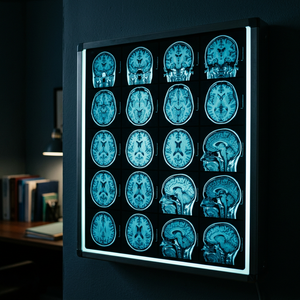
The force of a truck crash can injure the brain even when the head never strikes anything, as the brain moves inside the skull. A concussion or traumatic brain injury may not show up on a CT scan in the emergency room. Headaches, memory gaps, dizziness, trouble finding words, irritability and sensitivity to light or noise can appear days or weeks later. Brain injury cases often need neurologists, neuropsychologists and imaging such as MRI to show the full injury. Seattle brain injury lawyer · Concussion symptom checklist
Back Fracture After a Semi Truck Accident
Compression fractures and burst fractures of the vertebrae are common when a car is struck by a heavy truck, especially in rear-end and rollover crashes. Some fractures heal with bracing. Others need surgery such as spinal fusion, kyphoplasty or rods and screws, and can leave lasting pain and limits on lifting, sitting and working.
Neck Injuries and Herniated Discs
The sudden jolt of a truck impact can tear ligaments and muscles in the neck and back and push discs out of place, pressing on nerves. Numbness, tingling or weakness in the arms or legs can be a sign of nerve involvement. Injections, physical therapy and sometimes surgery may be needed.
Spinal Cord Injury and Paralysis
When a fracture or dislocation damages the spinal cord, the result can be partial or complete paralysis. These injuries change every part of daily life and usually require a life care plan that accounts for medical care, equipment, home changes and help for the rest of a person’s life. Spinal cord injury lawyer
Broken Bones and Crush Injuries
Cabin intrusion in a truck crash can fracture the pelvis, hips, legs, arms and ribs. Crush injuries can damage muscle and nerves and may lead to complications long after the bones heal. Many of these injuries require more than one surgery and months of rehabilitation. Catastrophic injury lawyer
Amputation
Severe crush injuries sometimes cannot be repaired, and a limb is lost at the scene or in surgery. An amputation claim has to account for prosthetics, which wear out and need replacing, along with therapy, lost work and the emotional toll.
Burns and Scarring
Fuel fires and tanker crashes can cause deep burns that require skin grafts, repeated procedures and treatment for scarring and disfigurement.
Internal Injuries
Internal bleeding, organ damage and injuries from the seatbelt or steering wheel may not be obvious at the scene. That is one of the reasons to get medical care right away, even if you feel fine.
PTSD, Anxiety and Emotional Trauma
Many people struggle after a violent truck crash with flashbacks, trouble sleeping, fear of driving or riding near trucks, and depression. These harms are real and can be part of a claim when they are documented by a treating provider.
Facial Fractures and Eye Injuries
Airbags, shattered glass and cabin intrusion can fracture the jaw, cheekbones and eye sockets and damage vision. These injuries often need reconstructive surgery and can leave permanent scarring or vision loss.
Shoulder, Knee and Joint Injuries
Bracing against an impact can tear the rotator cuff, the labrum or knee ligaments such as the ACL and meniscus. Many of these injuries need surgery and months of therapy, and some lead to arthritis later in life.
Wrongful Death
When a truck crash takes a life, Washington law allows the family to bring a claim for their loss, including lost support and the loss of the relationship. Wrongful death lawyer
Where King County Truck Crashes Happen
The Freight Corridors We Know
King County moves an enormous amount of freight through the ports, rail yards and warehouses of the Duwamish and Green River valleys. Serious truck crashes tend to happen on the same roads.
I-5
From downtown Seattle south through Tukwila, Kent and Federal Way, I-5 carries heavy truck traffic mixed with commuters, with constant merges and sudden slowdowns.
I-405 and SR 167
The Renton and Kent Valley corridor serves a major warehouse and distribution area, with trucks entering and leaving at all hours.
I-90 and Snoqualmie Pass
Through Bellevue, Issaquah and North Bend, I-90 climbs toward the pass. Winter weather, chain-up areas and long downgrades raise the risk of jackknife and brake failure crashes.
SR 18 and SR 99
SR 18 links Auburn and the Kent Valley to I-90. In Seattle, SR 99 and East Marginal Way carry port and rail traffic past the container terminals.
After a Truck Crash
What to Do Right Now
The first hours after a truck crash shape the whole case. These steps protect your health and the evidence that proves what happened.
Call (206) 206-6000
✓Call 911 and get medical care, even if you feel fine. Some brain and spine injuries show up later.
✓Photograph the truck, the trailer, the company name, the DOT number on the door and the scene, if you can do it safely.
✓Get names and phone numbers of witnesses. Independent witnesses are often the most important evidence.
✓Do not give a recorded statement to the trucking company or its insurer.
✓Call a lawyer quickly so a preservation letter goes out before the truck data is lost.
Compensation
What a Truck Accident Claim Can Recover
✓
Medical care, now and in the future
Hospital care, surgery, therapy, medication, equipment and the cost of future treatment and care.
✓
Lost income and earning capacity
Wages lost while you recover and the income you can no longer earn if you cannot return to the same work.
✓
Pain, suffering and lost quality of life
The physical pain, emotional harm and loss of the activities and independence you had before.
✓
Harm to your family
A spouse or family member may have their own claim for loss of companionship and support. Loss of consortium
✓
Property damage
Repair or replacement of your vehicle and personal property.
✓
Wrongful death damages
Losses suffered by the family when a loved one is killed, including lost financial support and the loss of the relationship.
Washington Law
What If I Was Partly at Fault?
This is one of the first questions people ask us, and the answer is usually better than they expect. Washington follows a pure comparative fault rule under RCW 4.22.005. Being partly at fault does not bar you from recovering. Your compensation is reduced by your share of the fault.
For example, if a jury decides your damages are $1,000,000 and finds you 20 percent at fault, you would recover $800,000. The trucking company pays for its share of the harm it caused.
Trucking companies and their insurers know this rule, so they often try to shift as much blame as they can onto the injured driver. They may point to your speed, a lane change or a delayed reaction. The truck's black box, dash cameras and an early accident reconstruction are often the best answers to those arguments. Do not admit fault or give a recorded statement to the trucking company's insurer before talking to a lawyer.
How a Case Works
The Path of a Truck Accident Case
-
Free consultation. We listen, review what happened and tell you honestly what we think.
-
Investigation. We send preservation demands, gather reports and records, and bring in reconstruction and trucking experts when needed.
-
Treatment and documentation. You focus on getting better. We track your medical care, lost income and how the injuries affect your life.
-
Claim and negotiation. We present the claim to every responsible company and insurer and negotiate from a position of strength.
-
Lawsuit and discovery. If the case does not resolve fairly, we file suit and use depositions and document requests to get the full story.
-
Mediation and trial. Many cases resolve at mediation. If not, we try the case to a jury.
Your Case in King County
Where Cases Are Filed and How Long You Have
King County Superior Court
Truck injury and wrongful death lawsuits in King County are filed in King County Superior Court, which hears cases at the King County Courthouse at 516 Third Avenue in downtown Seattle and at the Maleng Regional Justice Center at 401 Fourth Avenue North in Kent.
The deadline to sue
In Washington, most personal injury claims must be filed within three years under RCW 4.16.080(2). Some deadlines are shorter or work differently, so do not wait to find out which rules apply to you.
When a government vehicle is involved
If a city, county, transit or state vehicle caused the crash, Washington requires a written claim to be filed with the government first, followed by a waiting period before a lawsuit can be filed.
Why Clients Choose Evan Oshan
A Trial Lawyer Who Prepares Every Case for Court
Evan Oshan has spent more than 26 years trying cases for injured people and families in Washington and New York. He prepares every case as if it is headed to trial, because insurance companies pay more attention when they know a lawyer is ready to try it. He has represented passengers and families against major airlines and government agencies, and his cases have been covered by news outlets across the country.
See Evan in the newsAbout EvanClient reviews
What Clients Say
Real Clients, Real Reviews
★★★★★
"I hired Evan after my husband died in a car accident and he was very thorough and always easy to touch base with. He made everything clear and what I appreciated the most was how fast he would respond with answers for all my questions."
Michelle, Avvo review
★★★★★
"Very good at what he does. Five stars isn't enough."
Kelsha Anderson, Avvo review
See all reviews
Serving All of King County
Truck Accident Help Across King County
We represent truck crash victims and families throughout King County, including Seattle, Kent, Auburn, Federal Way, Renton, Tukwila, SeaTac, Bellevue, Issaquah, North Bend and Enumclaw, and we take serious truck cases across Washington. Yakima truck accidents.
Common Questions
Truck Accident FAQs
How much does it cost to talk to a lawyer?
Nothing. The consultation is free and confidential.
Who pays when a truck driver causes a crash?
Usually the trucking company and its insurer. Depending on the facts, a broker, shipper, maintenance company or manufacturer may also be responsible.
How long do I have to file a truck accident claim in Washington?
Most personal injury claims must be filed within three years, but claims against government agencies have extra steps that come first. Talk to a lawyer as soon as you can.
What if I was partly at fault?
Washington lets you recover even if you were partly at fault, though your recovery is reduced by your share of the fault. Do not assume you have no case.
Should I talk to the trucking company’s insurance adjuster?
Not before you get legal advice. Their job is to limit what the company pays.
Talk to Evan Oshan Today
If you or someone you love was badly hurt or killed in a truck crash in King County, call for a free consultation. The sooner we start, the more evidence we can protect.
Call (206) 206-6000