Personal Injury Law Firm in Seattle Washington. Free case evaluation (206) 206-6000

June 20, 2020
Updated November 2026
Truck Accident Guide
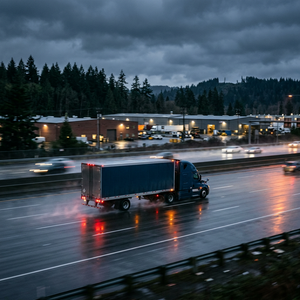
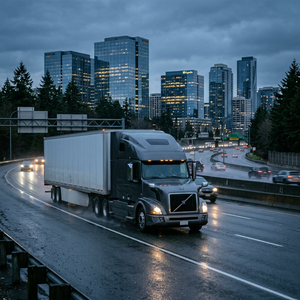
A loaded tractor-trailer can weigh up to 80,000 pounds. When it hits a car, the people in the car take almost all of the force. Truck cases are also different from car cases: there are federal safety rules, driver logs, company records and often several insurers. Here is what you need to know, and what to do while the evidence still exists.
Offices in New York and Seattle · Free, confidential consultation · No attorney fee unless we recover
5,340
people killed in large truck crashes in the U.S. in 2024
70%
of those killed were in other vehicles
$750,000
minimum insurance for most interstate freight carriers
6 months
minimum time carriers must keep driver logs
Sources: NHTSA, Traffic Safety Facts 2024: Large Trucks, 49 CFR 387.9, 49 CFR 395.8.
Driver Fatigue
Federal limits on driving time for property-carrying trucks.
Tired truck drivers cause crashes, so federal law limits how long they can drive. Under the FMCSA hours-of-service rules, a property-carrying driver may drive up to 11 hours after 10 consecutive hours off duty, may not drive past the 14th hour after coming on duty, must take a 30-minute break after 8 hours of driving, and may not drive after 60 or 70 hours on duty in 7 or 8 days.
Drivers record this time, usually on an electronic logging device. Carriers must keep those records and supporting documents for at least six months under 49 CFR § 395.8(k)(1). After that, they can be lawfully discarded, which is one reason to act quickly after a truck crash.
Washington adopts these federal rules for carriers in both intrastate and interstate commerce, with some exceptions, under WAC 446-65-010. When a driver broke the rules, that can be strong evidence of negligence against both the driver and the company.
Blind Spots
The largest blind spot runs along the right side.
Large trucks have big blind spots directly in front, directly behind, and along both sides, with the right side being the largest. A truck driver who changes lanes or makes a wide right turn without making sure the space is clear can sideswipe a car or push it off the road.
Truck drivers are trained about these blind spots and are expected to check mirrors, signal and move slowly. Being in a blind spot does not make a car driver at fault when a truck merges into them.
Underride crashes, where a car slides under the side or back of a trailer, are among the most deadly. If you lost a family member this way, our wrongful death guide explains how those claims work.
Who Is Liable
1
For speeding, distraction, fatigue, impairment or unsafe lane changes.
2
For the driver's conduct on the job, and for its own hiring, training, scheduling and maintenance.
3
Owners are sometimes separate companies from the carrier.
4
For overweight, unbalanced or unsecured cargo.
5
For bad brake work, defective tires or defective parts.
6
For dangerous road design or work zones, with short notice deadlines.
Many truck crashes involve more than one responsible party, and each may have its own insurer. Interstate carriers hauling ordinary freight in trucks of 10,001 pounds or more must carry at least $750,000 in liability coverage, and more for oil and certain hazardous materials, under 49 CFR § 387.9. For more, read why you need a truck accident lawyer. You can also learn about our truck accident practice in New York and Seattle.
Causes
1
Driving past hours-of-service limits or falsifying logs.
2
Phones, dispatch screens and in-cab devices.
3
A heavy truck needs far more room to stop.
4
Skipped inspections and deferred repairs.
5
Shifting or overweight cargo that causes rollovers or jackknifes.
6
Narrow lanes, poor signs and broken pavement.
NY and WA Law
New York. Your own no-fault coverage pays medical bills and lost wages first, up to $50,000, regardless of fault; apply within 30 days. To recover for pain and suffering, you need a serious injury as defined in Insurance Law § 5102(d). Under Vehicle and Traffic Law § 388, a vehicle owner is liable for injuries caused by the negligence of someone driving with the owner's permission. For car and truck cases filed on or after May 26, 2026, CPLR 1411(b) bars recovery if your share of fault is greater than the defendant's, according to the Department of Financial Services. See our New York no-fault guide and New York car accident guide.
Washington. Washington is a fault-based state with no serious injury threshold. You can claim medical bills, lost wages and pain and suffering from those at fault. Your recovery is reduced by your share of fault but not barred, under RCW 4.22.005.
Deadlines. Most injury lawsuits must be filed within three years in both states, under CPLR 214 and RCW 4.16.080. Claims against a government agency have much shorter notice rules: 90 days in New York under General Municipal Law § 50-e, and a claim must be filed and 60 days must pass before suit in Washington under RCW 4.96.020. City trucks raise these issues often; see our garbage truck accident guide.
Self-Help Tool
Tap each box as you go. A family member can do these steps if you cannot. Watch for headaches, fog or mood changes in the days after; see delayed concussion symptoms after a truck crash.
Questions
Often more than one party: the driver, the trucking company, the truck or trailer owner, the loading company, a repair shop or parts maker, and sometimes a government agency. Who is responsible depends on what caused the crash.
Under federal rules, a property-carrying driver may drive up to 11 hours after 10 hours off duty, may not drive past the 14th hour after coming on duty, and must take a 30-minute break after 8 hours of driving.
Federal rules require carriers to keep records of duty status and supporting documents for at least six months. A lawyer can send a letter asking the company to preserve them, along with dashcam, ELD and maintenance records.
Interstate carriers hauling ordinary freight in trucks of 10,001 pounds or more must carry at least $750,000 in liability coverage, and more for oil and certain hazardous materials. Many carry more.
Most injury lawsuits must be filed within three years in both New York and Washington. Claims against government agencies have much shorter notice deadlines, and New York no-fault applications are due within 30 days.
The consultation is free and confidential, and you pay no attorney fee unless we recover compensation for you.
Oshan & Associates, P.C. represents injured people and families in Washington and New York. The consultation is free and confidential, and you pay no attorney fee unless we recover compensation for you.
Call (206) 206-6000Learn More
Semi truck and commercial vehicle crash claims.
Crashes with delivery vans and box trucks.
Symptoms that can show up hours or days later.
How to request a Washington collision report.
This guide gives general information and is not legal advice. Laws, regulations and statistics were checked against official and published sources in November 2026.
Comments will be approved before showing up.
November 26, 2026
How long before you can work after a concussion, how to plan a gradual return, warning signs to watch for and what Washington workers should know about lost wages.
November 24, 2026
Hurt in a crane accident in Washington? Learn how load charts and rated capacity work, why rigging fails, crane operator certification rules, and how injured workers can recover beyond workers' compensation.
November 23, 2026
When concussion symptoms last for months, timing and proof matter. What post-concussive syndrome means for an injury claim in Washington, and why you should not settle too soon.
Seattle Practice Areas
Personal Injury
Car Accident
Semi Truck Accident
Bus Accident
Motorcycle Accident
Pedestrian Accident
Brain Injury
Spinal Cord Injury
Catastrophic Injury
Wrongful Death
Loss of Consortium
Childhood Sexual Abuse
Bicycle Accident
Police Excessive Force
911 Response Failure
Uber & Lyft Accident
Uninsured Motorist
Dog Bite
Drunk Driver Crash
Delivery Truck
Premises Liability
Burn Injury
Scooter & E-Bike
Light Rail & Train
Kent Practice Areas
Auburn Practice Areas
Bellevue Practice Areas
Renton Practice Areas
Federal Way Practice Areas
Kirkland Practice Areas
Redmond Practice Areas
Burien Practice Areas
SeaTac & Tukwila Practice Areas
Shoreline Practice Areas
Tacoma Practice Areas
The information provided on this website, including all blog posts, articles, and other content, is for informational purposes only and should not be construed as legal advice. No attorney-client relationship is formed by accessing or using this site or its contents.